


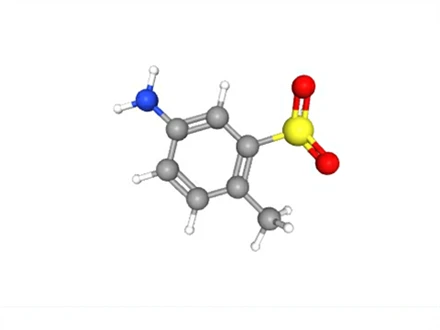

6973-09-7 5-Amino-2-methylbenzenesulfonamide
CAS:6973-09-7
MF:C7H10N2O2S
MW:186.23
EINECS:691-180-5
MDL No.:MFCD06681071
5-amino-2-methylbenzenesulfonamide
1, Physical and chemical properties
Appearance: Usually white to light yellow crystalline powder, the higher the purity, the closer the color is to white, and there is no obvious odor
• Melting point: 154-158 ℃, narrow melting point range, can be used as one of the important indicators to judge product purity
• Solubility: Slightly soluble in cold water, soluble in polar organic solvents such as hot water, ethanol, and acetone, insoluble in non-polar solvents such as benzene, ether, and petroleum ether; Dissolve in dilute hydrochloric acid or dilute sodium hydroxide solution to form corresponding salts
• Stability: Stable under normal temperature, dry, and dark conditions, not easily absorbing moisture or decomposing; Avoid prolonged contact with strong oxidants, strong acids (concentrated), and strong bases (concentrated), as oxidation, hydrolysis, and other reactions may occur
Purity: The purity of industrial grade products is generally ≥ 98%, and the purity of pharmaceutical intermediate grade products can reach over 99%. The impurity content (such as heavy metals and other organic impurities) meets relevant industry standards
2, Product Core Features
(1) High reactivity
The amino group (- NH ₂) and sulfonamide group (- SO ₂ NH ₂) in the molecular structure are both active functional groups, and the amino group is prone to acylation, diazotization, coupling and other reactions. The sulfonamide group can undergo hydrolysis, substitution and other reactions, making it a key intermediate to participate in various organic synthesis reactions, providing flexible reaction sites for downstream product preparation.
(2) Excellent selectivity
In the process of organic synthesis, its specific substitution positions (2-methyl, 5-amino, 1-sulfonamide) enable the reaction to have good selectivity, accurately bind to the target reactant, reduce side reactions, improve the yield of the target product, reduce the difficulty of subsequent separation and purification, and save production costs.
(3) Good stability and safety
Compared to some easily decomposable and volatile aromatic intermediates, 5-amino-2-methylbenzenesulfonamide has strong stability under conventional storage and transportation conditions and is less prone to dangerous reactions; And it has no obvious toxicity (following conventional chemical operating procedures), is used in an operating environment that meets safety standards, has low risk, and meets the safety requirements of overseas markets for chemical intermediates.
(4) Adapt to the needs of multiple fields
With its chemical structure characteristics, it can be converted into various functional products through different reaction pathways according to downstream industry needs. It can meet the strict requirements of high purity and low impurities in the pharmaceutical field, as well as the requirements of cost-effectiveness and reaction efficiency in dye, pesticide and other fields, and has a wide range of applications.
3, Product Usage and Application Fields
5-amino-2-methylbenzenesulfonamide, as an important aromatic organic intermediate, is widely used in overseas pharmaceutical, dye, pesticide and other fields. It is one of the core procurement products for buyers and distributors in related industries. The specific uses and application areas are as follows:
(1) Medical field
a. Intermediate of antibacterial drugs
It is a key raw material for synthesizing sulfonamide antibiotics. By introducing specific functional groups through acylation reactions, drugs such as sulfamethoxazole (a broad-spectrum antibiotic) can be prepared; This type of drug has inhibitory effects on both Gram positive and Gram negative bacteria, and is commonly used to treat respiratory infections, urinary system infections, skin and soft tissue infections, and other diseases. It has a stable demand in the global anti infective drug market.
b. Synthesis of anti-inflammatory and analgesic drugs
Can be used as an intermediate in the preparation of nonsteroidal anti-inflammatory drugs, adjusting molecular structure through chemical modification to enhance the inhibitory effect of drugs on inflammatory factors, while reducing irritation to the gastrointestinal tract; In addition, in the synthesis of some analgesic drugs, their sulfonamide groups can improve the water solubility and bioavailability of drugs, enhancing drug efficacy.
c. Diagnostic reagent raw materials
In the field of medical diagnosis, it can be used to prepare specific biochemical diagnostic reagents, such as reagents used to detect the activity of specific enzymes or metabolites in the body; Its amino and sulfonamide groups can specifically bind to substrates in diagnostic reagents, forming a stable colorimetric or luminescent system to assist in early diagnosis of diseases.
(2) Dye field
a. Azo dye intermediates
As a coupling component, it can react with diazonium salts (such as aniline diazonium salts) to prepare various azo dyes, including acid dyes, direct dyes, etc; This type of dye has bright colors, strong coloring power, good washing and sun fastness, and is widely used for dyeing natural fibers such as cotton, wool, and silk, as well as synthetic fibers such as nylon and polyester. It is also used for coloring paper and leather.
b. Synthesis of functional dyes
Used for synthesizing dyes with specific functions, such as fluorescent dyes, thermosensitive dyes, etc; By modifying its molecular structure and introducing fluorescent or thermosensitive responsive groups, specialized dyes for textile anti-counterfeiting, biological imaging (fluorescent dyes), or label printing (thermosensitive dyes) can be prepared to meet the demands of the high-end dye market.
(3) Pesticide field
a. Intermediate herbicides
Selective herbicides can be synthesized through reactions such as chlorination and cyclization. These herbicides can accurately inhibit the photosynthesis or amino acid synthesis of weeds, and have high safety for crops such as wheat, corn, and rice. They can effectively control broad-leaved weeds and have a long shelf life, reducing the frequency of pesticide use, which is in line with the concept of green planting in overseas agriculture.
b. Intermediate of fungicides
Participate in the preparation of fungicides against plant fungal diseases, whose sulfonamide groups have inhibitory effects on fungal cell wall synthesis. They can be used to prevent and control diseases such as powdery mildew and downy mildew in vegetables and fruits, and improve crop yield and quality; At the same time, these fungicides are not prone to developing resistance and have strong competitiveness in the overseas pesticide market.
(4) Other fields
a. Organic synthesis reagents
In the field of fine chemicals, it can be used as a functional reagent in organic synthesis to prepare special chemicals containing sulfonamide groups, such as crosslinking agents for polymer materials, intermediates for surfactants, etc; Its unique functional group structure can improve the mechanical properties and heat resistance of polymer materials, or enhance the emulsification and dispersion effects of surfactants.
b. Electronic chemical raw materials
In the electronics industry, after special purification and modification, it can be used to prepare electronic grade photosensitive materials or semiconductor cleaning agents. Its high-purity characteristics can avoid the influence of impurities on the performance of electronic components, ensure the stability and service life of electronic equipment, and are suitable for overseas semiconductor and electronic device manufacturing enterprises.
Hot Tags: 6973-09-7 5-Amino-2-methylbenzenesulfonamide, China 6973-09-7 5-Amino-2-methylbenzenesulfonamide manufacturers, suppliers, Lithium bis trimethylsilyl amide, 9 Oxo 10 9H acridineacetic acid, nucleotide material, nanotube material, fiber material, Heptanedioic acid monoethyl ester

