
Canbi Pharma Tech Limited

New Material

Canbi Pharma Technology


Canbi Pharma Technology is a subsidiary of Chongqing Kalan Pharmaceutical Co., Ltd.(Also known as CONIER CHEM AND PHARMA LIMITED). It was founded in the first economic and technological development zone in Southwest China. It is a young company focusing on the fields of organic chemistry and biological engineering. The company specializes in the development, production, and sales of chemicals, new materials, pharmaceutical intermediates, and APIs.


Why Choose Us

Our History

It is a young company focusing on the fields of organic chemistry and biological engineering. The company specializes in the development, production, and sales of chemicals, new materials, pharmaceutical intermediates, and APIs.


Our service

We divide inquiries into two categories: service-focused and project-focused. We view some inquiries as an opportunity to provide long-term supply chain services to customers, while we manage other inquiries with rigorous project management.

Our Information

In the past 15 years, we have provided products to customers in over 30 countries and won the trust of many famous international companies.


Our Group

Our group mainly includes three companies. Shanghai Canbi Pharmaceutical Technology Co., Ltd. is located in the economic center of China, Shanghai.


First 123456 Last 1/6

What Is 78-82-0 Isobutyronitrile


Isobutyronitrile (IBN) is an aliphatic nitrile. It is widely used as a solvent for electrochemical analyses. IBN can be prepared from amino acids, via anaerobic degradation. It undergoes oxidative dehydrogenation in the presence of an iron phosphate catalyst to afford methacrylonitrile, acetone, carbon oxides and traces of cyanic acid.


Feature of 78-82-0 Isobutyronitrile
 
01/

Exceptional purity
One of the key features of Isobutyronitrile is its exceptional purity. Our product undergoes rigorous quality control measures to ensure it meets the highest industry standards. This guarantees that you receive a reliable and consistent product every time, allowing for precise and accurate results in your applications.

02/

Versatility
The versatility of Isobutyronitrile is another standout feature. Its solvency power makes it an excellent choice for dissolving various organic compounds, enabling efficient reactions and extractions. Additionally, its stability and compatibility with a wide range of materials make it suitable for use in different formulations and processes.

03/

Physical Properties
Isobutyronitrile is a colorless liquid at room temperature with a faint odor. It has a boiling point of approximately 98 °C and a melting point of -86 °C. Its density is about 0.81 g/cm³, making it less dense than water, which influences its behavior in various applications, particularly in organic solvents.

04/

Reactivity
The cyano group in isobutyronitrile is highly reactive and can participate in nucleophilic addition reactions. This property is utilized in the synthesis of various organic compounds, including pharmaceuticals and agrochemicals. It can also undergo hydrolysis to form isobutyric acid.


Purity Of Isobutyronitrile


Isobutyronitrile is available in two different purities: 98% and 99%. The 99% purity grade is considered higher quality and more refined than the 98% purity grade. These different types cater to a wider range of industries with varying purity requirements, such as pharmaceuticals, agrochemicals, and specialty chemicals. Having options for different levels of purity helps meet specific industry needs, thus boosting the demand for Isobutyronitrile in the market.


Method for Preparing Isobutyronitrile from Isobutyl Alcohol
 

A kind of method that is used for preparing isobutyronitrile by use of isobutyl alcohol, with isopropylcarbinol and ammonia is raw material, in temperature of reaction is 350~480 ℃, reaction pressure is under normal pressure~0.3MPa condition, reaction raw materials contacts with catalyzer and generates isopropyl cyanide, wherein used catalyzer comprises following component by weight percentage:

  • 20~80% Al 2O 3
  • 80~20% ZnO;


Purification Methods
 

Shake the nitrile with conc HCl (to remove isonitriles), then with water and aqueous NaHCO3. After a preliminary drying with silica gel or Linde type 4A molecular sieves, it is shaken or stirred with CaH2 until hydrogen evolution ceases, then decanted and distilled from P2O5 (not more than 5g/L, to minimize gel formation) or Drierite (b 101-103o/760mm). Finally it is refluxed with, and slowly distilled from CaH2 (5g/L), taking precautions to exclude moisture.

78-82-0 Isobutyronitrile

Molecule and Radical Structures of Isobutyronitrile


78-82-0 Isobutyronitrile

Article Info Abstract Molecule and radical structures of Isobutyronitrile were studied by DFT computations. Results of conformational analysis performed by combination of molecular mechanic and B3LYP/6-311++G(d,p) methods showed that isobutyronitrile inelastic molecule which has only one conformer. Using this structure, radical structure was investigated. Possible radicals were modelled and the experimental Electron Paramagnetic Resonance parameters were calculated. The calculated parameters obtained from B3LYP/TZVP computations were compared with the experimental counterparts which were taken from literature.


The Method of Determination for Butyronitrile and Isobutyronitrile in the air of Workplace by Dissolved Desorption-Gas Chromatography


Methods: In March 2020, butyronitrile and isobutyronitrile in the air of workplace was collected by silica gel, eluted with methanol, separated and determined by gas chromatogram with flame ionization detector, the characteristics of determination of nitrile and isobutyronitrile by gas chromatography were analyzed. Results: The limit of detection for butyronitrile and isobutyronitrile was 0.33 μg/ml.


The linear range of butyronitrile determined by this method was 1.60-1600.00 μg/ml, y=2.295x-3.480, and the coefficient correlation was 0.99998, and the minimum detection concentration was 0.22 mg/m(3) (collected sample volume was 1.50 L) . The within-run precisions were 2.43%-4.12%, the between-run precisions were 1.72%-3.70%, and the desorption rates were 93.26%-98.41%.


The linear range of isobutyronitrile determined by this method was 1.52-1520.00 μg/ml, y=2.208x-0.102, and the coefficient correlation was 0.99998, and the minimum detection concentration was 0.22 mg/m(3) (collected sample volume was 1.50 L) . The within-run precisions were 2.52%-3.22%, the between-run precisions were 1.20%-3.82%, and the desorption rates were 96.85%-102.50%. The sealed samples could be stored at least 10 days at room temperature without significant loss. Conclusion: The method has the advantages of good precision, high sensitivity and simple operation. It is suitable for the simultaneous determination of butyronitrile and isobutyronitrile in the air of workplace.


Application of Isobutyronitrile
 

Pesticide Production

Isobutyronitrile serves as an intermediate in the production of pesticides. Vital for synthesizing the organophosphorus insecticide diazinon, particularly in the production of the intermediate 2-isopropyl-4-methyl-6-hydroxy pyrimidine.

78-82-0 Isobutyronitrile

Pharmaceutical Intermediates

Utilized as an intermediate in pharmaceutical synthesis. It is used to synthesize compounds such as isobutylamine, which is further utilized in the creation of various active pharmaceutical ingredients (APIs) and herbicides.

Additives

Acts as an additive in acrylic resin production. Its unique chemical structure allows it to act as a building block in the synthesis of polymeric materials with specific properties, such as improved thermal stability and chemical resistance.

78-82-0 Isobutyronitrile

Solvent for Organic Reactions

Due to its polar aprotic nature, Isobutyronitrile is employed as a solvent in organic synthesis reactions. It can dissolve a wide range of organic compounds and facilitate nucleophilic substitution reactions, making it ideal for laboratory and industrial processes.


What Is 621-59-0 Isovanillin


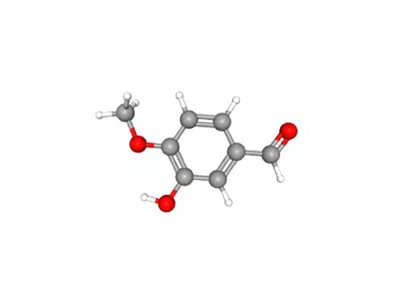
Isovanillin, also known as 3-hydroxy-4-methoxybenzaldehyde, is a chemical compound with the CAS number 621-59-0. Isovanillin, an isomer of vanillin, is a light tan crystalline solid known for its unique fragrance properties. It exhibits distinct characteristics compared to vanillin, with its aroma varying in response to changes in ambient temperature. This sensitivity to temperature fluctuations makes it an ideal candidate for specialized applications within the cosmetics and fragrance industries.


Advantages of 621-59-0 Isovanillin

Natural Flavoring Agent

Isovanillin is often used as a natural flavoring agent in food products, providing a pleasant vanilla-like aroma and taste without synthetic additives.

Antioxidant Properties

It exhibits strong antioxidant activity, which helps protect cells from oxidative stress and may reduce the risk of chronic diseases.

Biological Activity

Research suggests that isovanillin may have potential therapeutic effects, including anti-inflammatory and antimicrobial properties, making it valuable in pharmaceutical applications.

Stability and Shelf Life

Isovanillin is relatively stable under various conditions, which contributes to its longer shelf life in formulations compared to some other flavoring compounds.


Application of Isovanillin
 

Food and Beverage Industry
One of the primary applications of isovanillin is in the food and beverage industry. Here, it serves as a flavoring agent, imparting a vanilla-like aroma and taste to a wide range of products. Isovanillin is particularly valued for its ability to provide a natural and cost-effective alternative to vanilla extract, making it popular among food manufacturers looking to enhance the sensory appeal of their offerings without increasing costs significantly.


Pharmaceutical Industry
Another significant sector where isovanillin finds extensive application is in the pharmaceutical industry. It is utilized in the production of pharmaceutical drugs due to its properties that aid in drug formulation and stabilization. Isovanillin's role in pharmaceuticals includes its use as a flavoring agent in oral medications and as a chemical intermediate in the synthesis of various active pharmaceutical ingredients (APIs). This versatility makes isovanillin a crucial component in pharmaceutical formulations, contributing to both the taste and stability of medicinal products.


Cosmetic and Personal care Industry
The cosmetic and personal care industry represents another important segment for isovanillin. Here, it is utilized primarily for its fragrance-enhancing properties. Isovanillin is incorporated into a variety of cosmetic products such as perfumes, lotions, and creams to impart a pleasant vanilla-like scent. Additionally, its use extends to hair care products and toiletries, where it enhances the overall sensory experience for consumers. The cosmetic industry's demand for isovanillin underscores its role in enhancing product attractiveness and consumer satisfaction.


Used in Chemical Synthesis
Isovanillin is utilized as a starting reagent in the two-step stereoselective synthesis of anticancer drugs such as (Z)-combretastatin A-4 and glycitein. Its role in the synthesis process highlights its importance in the development of life-saving medications for various types of cancer.


Main Synthesis Methods


Resorcinol Method
Using resorcinol and acetic aldehyde as raw materials, 3,4-dihydroxybenzaldehyde is first synthesized through condensation and oxidative decarboxylation. Then, isovanillin is selectively synthesized from 3,4-dihydroxybenzaldehyde with a yield of up to 70%. However, the reaction is complex and difficult to control, as it also produces vanillin and isoeugenol simultaneously, requiring complicated separation and purification processes.


Alkyl Vanillin Method
Using ethyl vanillin as a raw material, 3-ethoxy-4-methoxybenzaldehyde is first synthesized through methylation with dimethyl sulfate. Under the action of concentrated sulfuric acid, 3-ethoxy-4-methoxybenzaldehyde is hydrolyzed to produce isovanillin with a reported yield of 96%. This method is currently the main industrial production method. However, using ethyl vanillin directly for the production of isovanillin is economically unreasonable, and the reaction generates a large amount of acidic waste liquid, which is difficult to handle and causes environmental pollution.


Hydroxybenzaldehyde Method
Using the byproduct of naringin synthesis, hydroxybenzaldehyde, as a raw material, is first subjected to monobromination with bromine, followed by methylation with dimethyl sulfate. Finally, under alkaline conditions, isovanillin is synthesized in three steps with a total yield of 62%. This method is a relatively novel synthesis route that overcomes the shortcomings of previous processes. It has the advantages of simplicity, high overall yield, low cost, and can be applied to industrial-scale production through pilot-scale amplification.


Sharing Synthesis Method for Vanillin and Isovanillin
 

The invention relates to a sharing synthesis method for vanillin and isovanillin. The method comprises the following steps of: performing alkylation reaction on guaiacol and halogenated hydrocarbon to prepare a 1-methoxy-2-alkoxylbenzene compound 1 in a high-yield way; performing Vilsmeier-Haack reaction on the 1-methoxy-2-alkoxylbenzene compound 1 and N,N-methylformanilide under the action of phosphorus oxychloride to generate a mixture of 3-methoxy-4-alkyloxybenzaldehyde 2 and 3-methoxy-4-methoxybenzaldehyde 3, separating the mixture out, selectively removing alkyl groups by directly using lewis acid to obtain a mixture of vanillin and isovanillin, and separating to prepare two compounds, namely vanillin and isovanillin. The method has the advantages of simplicity and high yield.

621-59-0 Isovanillin

Comparison of Vanillin and Isovanillin Photolysis in Aqueous Solutions


621-59-0 Isovanillin

General kinetic regularities of reactions of stationary and laser photolysis of 3-methoxy-4-hydroxybenzaldehyde (vanillin) and 3-hydroxy-4-methoxybenzaldehyde (isovanillin) are investigated by the method of nanosecond laser flash-photolysis. The 4th harmonic of a Nd:YAG laser (λexc = 266 nm) with pulse duration of 7 ns, output power of 100 MW/cm2, and delay time of 30 ns was used as an excitation source. As a result of photolysis, the same photoproducts are formed in the region of absorption at 715 nm. The rate constants of vanillin and isovanillin decomposition obey the first order law and are 2.3ṡ106 and 2.5ṡ106 s-1, respectively.


FAQ


Q: Is isovanillin a strong acid?

A: Isovanillic acid is an extremely weak basic (essentially neutral) compound (based on its pKa). It is a selective inhibitor of aldehyde oxidase. Isovanillic acid is a metabolite of isovanillin. Isovanillin is a phenolic aldehyde, an organic compound and isomer of vanillin.

Q: What is the use of Isovanillin?

A: It is a selective inhibitor of aldehyde oxidase. It is not a substrate of that enzyme, and is metabolized by aldehyde dehydrogenase into isovanillic acid, which could make it a candidate drug for use in alcohol aversion therapy. Isovanillin can be used as a precursor in the chemical total synthesis of morphine.

Q: What is the functional group of isovanillin?

A: Isovanillin is a member of the class of benzaldehydes that is 4-methoxybenzaldehyde substituted by a hydroxy group at position 3. It is an inhibitor of aldehyde oxidase. It has a role as an EC 1.2.

Q: How is isovanillin produced?

A: Synthesis of isovanillin: 4-Hydroxybenzaldehyde is used as raw material, firstly react with bromine to obtain 3-bromo-4-hydroxybenzaldehyde, then react with methyl iodide to obtain 3-bromo-4-methoxybenzaldehyde, and then hydrolyzed under the action of sodium hydroxide and cuprous chloride to produce isovanillin.

Q: What are the health benefits of isovanillin?

A: Isovanillin and iso-acetovanillon are two active components which are present in P. spinosa extract and both have antidiarrheal and anti-motility effect on gastrointestinal tract. Although these two compounds have significant contribution to antidiarrheal activity of the P.

Q: Can isovanillin be used in cosmetics?

A: Isovanillin is incorporated into a variety of cosmetic products such as perfumes, lotions, and creams to impart a pleasant vanilla-like scent. Additionally, its use extends to hair care products and toiletries, where it enhances the overall sensory experience for consumers. The cosmetic industry's demand for isovanillin underscores its role in enhancing product attractiveness and consumer satisfaction.

Q: Can isovanillin be used in food flavoring?

A: Here, it serves as a flavoring agent, imparting a vanilla-like aroma and taste to a wide range of products. Isovanillin is particularly valued for its ability to provide a natural and cost-effective alternative to vanilla extract, making it popular among food manufacturers looking to enhance the sensory appeal of their offerings without increasing costs significantly.

Q: What are the storage conditions for isovanillin?

A: Keep away from heat, sparks, and flame. Keep container tightly closed. Store in a cool and dark place. Store away from incompatible materials such as oxidizing agents.

Q: What is the use of isobutyronitrile?

A: Isobutyronitrile is a colorless liquid with an almond-like odor. It is used as an intermediate for insecticides, as a catalyst in the polymerization of Ethylene, and as a gasoline additive.

Q: What is the structure of isobutyronitrile?

A: Isobutyronitrile (C3H7CN) contains a carbon atom bounded by a simple link to two methyl (-CH3) structures and to a cyano group (–CN). The cyano group is constituted by a triple link bond between one carbon and one nitrogen atom.

Q: Is isobutyronitrile soluble in water?

A: Slightly soluble in water. Isobutyronitrile is only slightly soluble in water but is soluble in many organic solvents such as ethanol and ether. Isobutyronitrile is incompatible with the following: Oxidizers, reducing agents, strong acids & bases.

Q: How is isobutyronitrile produced?

A: Today, isobutyronitrile is generally made by passing isobutyl alcohol or isobutyraldehyde and ammonia over a suitable catalyst at high temperatures.

Q: What is the flash point of isobutyronitrile?

A: The flash point of Isobutyronitrile is approximately 6°C (43°F), indicating it is highly flammable. Less dense than water. Vapors heavier than air. Toxic oxides of nitrogen produced during combustion.

Q: What reactions can isobutyronitrile undergo?

A: Isobutyronitrile primarily undergoes radical reactions, most commonly initiated by its derivative, azobisisobutyronitrile (AIBN), where it generates isobutyronitrile radicals which can participate in polymerization reactions, cyclizations, halogenations, and other radical-based transformations; it can also undergo hydrolysis under acidic or basic conditions to form isobutyric acid.

As one of the leading new material manufacturers and suppliers in China, we warmly welcome you to buy high-grade new material in stock here from our company. All our products are with high quality and competitive price.

4-Chloro-2-nitrotoluene, Fine Chemicals, 1 3 Dibromobenzene
goTop

(0/10)

clearall