

Polymers have become an integral part of modern materials science, finding applications in various industries such as packaging, automotive, and electronics. The properties of polymers can be significantly tailored by incorporating different monomers or functional groups. In this blog, we will explore the mechanical properties of polymers containing 3 - iodooxetane. As a reliable supplier of 3 - iodooxetane, we are well - versed in the potential of this unique monomer in polymer synthesis.
1. Introduction to 3 - iodooxetane
3 - iodooxetane is a four - membered cyclic ether with an iodine atom attached to the third carbon atom. The presence of the iodine atom introduces unique reactivity and electronic properties to the molecule. This monomer can participate in various polymerization reactions, including ring - opening polymerization, due to the strain in the oxetane ring. The iodine atom can also act as a reactive site for further chemical modifications after polymerization, allowing for the introduction of additional functional groups or cross - linking agents.
2. Polymerization of 3 - iodooxetane
There are several methods to polymerize 3 - iodooxetane. One common approach is cationic ring - opening polymerization. In this process, a cationic initiator is used to initiate the opening of the oxetane ring, leading to the formation of a polymer chain. The reaction conditions, such as temperature, initiator concentration, and solvent, can have a significant impact on the molecular weight and structure of the resulting polymer.
For example, a Lewis acid initiator like boron trifluoride etherate can be used to initiate the polymerization of 3 - iodooxetane. The reaction typically occurs in an organic solvent such as dichloromethane at a relatively low temperature. The rate of polymerization can be controlled by adjusting the initiator concentration. Higher initiator concentrations generally lead to faster polymerization rates but may result in polymers with lower molecular weights.
Another method is anionic ring - opening polymerization. Although less common for 3 - iodooxetane compared to cationic polymerization, it can be used under specific conditions. Anionic initiators such as alkyl lithium compounds can be used to initiate the reaction. However, the presence of the iodine atom may require careful selection of the initiator and reaction conditions to avoid side reactions.
3. Mechanical Properties of Polymers Containing 3 - iodooxetane
3.1 Tensile Properties
The tensile strength and elongation at break of polymers containing 3 - iodooxetane are important mechanical properties. The presence of the iodine - containing oxetane units can affect the intermolecular forces within the polymer. The iodine atom has a relatively large atomic radius and can contribute to increased van der Waals forces between polymer chains. This can lead to an increase in the tensile strength of the polymer.
However, the bulky iodine atom may also introduce some steric hindrance, which can limit the mobility of the polymer chains. As a result, the elongation at break may be reduced compared to polymers without the iodine - containing units. The molecular weight of the polymer also plays a crucial role. Higher molecular weight polymers generally have higher tensile strengths due to the increased entanglement of the polymer chains.
3.2 Hardness
The hardness of polymers containing 3 - iodooxetane is related to the stiffness of the polymer chains and the intermolecular interactions. The iodine - containing oxetane units can contribute to the overall stiffness of the polymer. The presence of the iodine atom can increase the polarizability of the polymer chains, leading to stronger intermolecular forces and a harder material.
The cross - linking density also affects the hardness. If the polymer is cross - linked, either through the reaction of the iodine atom or other cross - linking agents, the hardness will increase significantly. Cross - linking restricts the movement of the polymer chains, making the material more rigid.
3.3 Impact Resistance
Impact resistance is an important property, especially for polymers used in applications where they may be subjected to sudden forces. The presence of the iodine atom in the polymer can have a complex effect on impact resistance. On one hand, the increased intermolecular forces due to the iodine atom can make the polymer more brittle, reducing its impact resistance. On the other hand, if the polymer has a certain degree of flexibility and can absorb energy through chain movement, the iodine - containing units may contribute to energy dissipation and improve impact resistance.
The morphology of the polymer, such as the presence of crystalline or amorphous regions, also affects impact resistance. Crystalline regions are generally more brittle, while amorphous regions can provide some flexibility and improve impact resistance.
4. Applications Based on Mechanical Properties
The unique mechanical properties of polymers containing 3 - iodooxetane make them suitable for various applications.
4.1 Coating Applications
Due to their relatively high hardness and good adhesion properties, these polymers can be used as coatings. For example, they can be applied to metal surfaces to provide protection against corrosion and wear. The iodine - containing units can also enhance the barrier properties of the coating, preventing the penetration of oxygen and moisture.
4.2 Adhesive Applications
The polymers can be used as adhesives, especially in applications where strong bonding and some degree of flexibility are required. The intermolecular forces provided by the iodine - containing units can contribute to strong adhesion to different substrates.
4.3 Biomedical Applications
In the biomedical field, the mechanical properties of these polymers can be tailored for specific applications. For example, they can be used as scaffolds for tissue engineering. The ability to control the tensile strength and porosity of the polymer can provide a suitable environment for cell growth and tissue regeneration.
5. Related Compounds and Their Significance
In the context of polymer synthesis and 3 - iodooxetane, there are several related compounds that are worth mentioning. 209995 - 38 - 0 2,4,5 - trifluorophenylacetic Acid can be used as a co - monomer or a functionalizing agent in some polymer systems. The fluorine atoms in this compound can introduce unique properties such as increased chemical resistance and low surface energy.
1267610 - 26 - 3 is another compound that may have potential applications in combination with 3 - iodooxetane polymers. Although the specific role of this compound depends on its chemical structure, it could be used as a cross - linking agent or a modifier to further enhance the mechanical or other properties of the polymers.
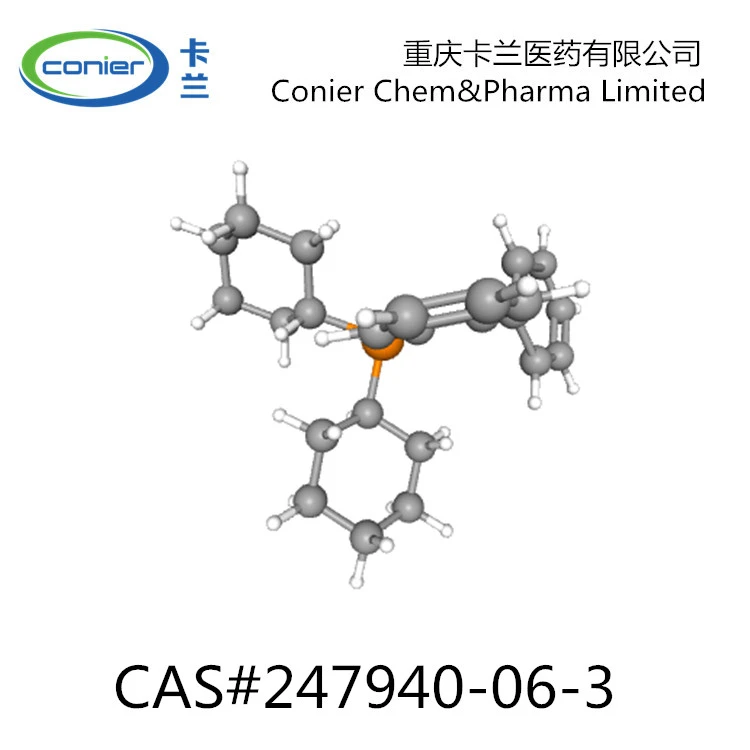
247940 - 06 - 3 2-(Dicyclohexylphosphino) Biphenyl is a phosphine - based compound that can be used as a ligand in catalytic systems for polymer synthesis. It can help in controlling the polymerization reaction and improving the selectivity and efficiency of the process.
6. Conclusion and Procurement Invitation
In conclusion, polymers containing 3 - iodooxetane exhibit unique mechanical properties that are influenced by the presence of the iodine - containing oxetane units, molecular weight, and cross - linking density. These polymers have potential applications in various industries, including coatings, adhesives, and biomedicine.

As a trusted supplier of 3 - iodooxetane, we are committed to providing high - quality products and technical support. If you are interested in exploring the potential of 3 - iodooxetane in your polymer research or production, we invite you to contact us for procurement and further discussions. Our team of experts is ready to assist you in finding the best solutions for your specific needs.
References
- Odian, G. Principles of Polymerization. John Wiley & Sons, 2004.
- Ivin, K. J., & Saegusa, T. Ring - Opening Polymerization: Kinetics, Mechanisms, and Synthesis. Elsevier, 1984.
- Polymer Science: A Comprehensive Reference, Volume 1 - 10. Elsevier, 2012.
