

Hey there! As a supplier of bio - chemicals, I've seen firsthand how these substances are making waves in the construction industry. Bio - chemicals are derived from living organisms or their by - products, and they're becoming increasingly popular in construction due to their eco - friendliness and unique properties. Let's dive into some of the bio - chemicals that are being used in the construction world.
1. Enzymes
Enzymes are like the superheroes of bio - chemicals. They're proteins that speed up chemical reactions without being consumed in the process. In construction, enzymes are often used in concrete production.
One of the main benefits of using enzymes in concrete is that they can improve the workability of the mixture. Concrete that has enzymes added to it is easier to pour and shape, which can save time and labor on the construction site. Enzymes can also enhance the strength and durability of the concrete. They help in better hydration of cement particles, leading to a more compact and stronger concrete structure.
For example, some enzymes can break down complex organic compounds that might be present in the aggregates used in concrete. This reduces the potential for chemical reactions that could weaken the concrete over time. As a bio - chemical supplier, I've had many construction companies come to me looking for enzyme - based products to improve their concrete quality.
2. Lignin
Lignin is a natural polymer that is found in the cell walls of plants. It's one of the most abundant organic materials on Earth. In the construction industry, lignin has several applications.
One of the key uses of lignin is as a binder. It can be used in the production of particleboards and fiberboards. These boards are commonly used in interior construction, such as for wall panels and furniture. Lignin - based binders are a more sustainable alternative to traditional synthetic binders, which are often made from petrochemicals.
Lignin can also be used as an additive in asphalt. When added to asphalt, it can improve the performance of the road surface. It increases the stiffness and resistance to deformation of the asphalt, which is especially important in high - traffic areas. As a supplier, I've supplied lignin to road construction companies looking to make their asphalt more durable and environmentally friendly.

3. Chitosan
Chitosan is a bio - polymer that is derived from chitin, which is found in the shells of crustaceans like shrimp and crabs. It has some amazing properties that make it useful in construction.
One of the main applications of chitosan is in water treatment for construction sites. Construction activities often generate a lot of wastewater that contains sediment, heavy metals, and other pollutants. Chitosan can be used as a flocculant to remove these contaminants from the water. It binds to the particles in the water, causing them to clump together and settle out, making the water cleaner and safer to discharge.
Chitosan can also be used in soil stabilization. When mixed with soil, it can improve the soil's strength and stability. This is particularly useful in areas where the soil is weak or prone to erosion. Construction companies have been increasingly interested in chitosan - based products for soil improvement projects.
4. Bio - polymers
Bio - polymers are polymers that are produced from renewable biological resources. There are many types of bio - polymers, and they have a wide range of applications in construction.
Polylactic acid (PLA) is a well - known bio - polymer. It can be used in 3D printing for construction components. 3D printing in construction is a growing trend, and PLA offers a sustainable alternative to traditional plastics. It has good mechanical properties and can be easily printed into complex shapes.
Another bio - polymer, polyhydroxyalkanoates (PHA), is also being explored for construction applications. PHA is biodegradable and has excellent barrier properties. It could potentially be used in the production of waterproof membranes for buildings. As a bio - chemical supplier, I'm always on the lookout for new bio - polymers that can be introduced to the construction market.
5. Specific Bio - chemicals with Links
Now, let me introduce you to some specific bio - chemicals that we supply and their potential uses in construction.
The 56001 - 37 - 7 Guanosine - 5'-triphosphoric Aicd Disodium Salt is a bio - chemical that might not be as well - known in the construction industry at first glance. However, it has potential applications in the development of new construction materials. Some research is being done on using it in the synthesis of bio - based polymers that could have unique properties for construction, such as improved flexibility and strength.
The 360 - 65 - 6 Glycodeoxycholic Acid is a bile acid that could be used in the formulation of additives for concrete. It might help in the dispersion of cement particles, leading to a more homogeneous concrete mixture. This could result in better - performing concrete with fewer defects.
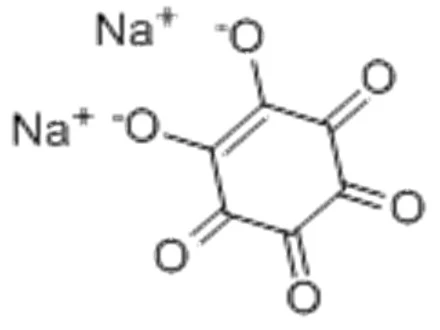
The 523 - 21 - 7 Rhodizonicacidsodiumsalt has potential uses in the detection of heavy metals in construction materials. Construction materials sometimes contain trace amounts of heavy metals, which can be harmful to the environment and human health. This bio - chemical can be used in testing kits to quickly and accurately detect the presence of these metals.
Why Choose Bio - chemicals in Construction?
There are several reasons why the construction industry is turning to bio - chemicals. Firstly, environmental concerns are at the forefront. Bio - chemicals are generally more sustainable and have a lower carbon footprint compared to traditional construction chemicals. They're derived from renewable resources, which means they can help reduce the industry's reliance on fossil fuels.
Secondly, bio - chemicals often offer unique performance advantages. As we've seen with enzymes in concrete and lignin in asphalt, they can improve the quality and durability of construction materials. This can lead to longer - lasting buildings and infrastructure, which is beneficial for both the construction companies and the end - users.
Finally, there's a growing demand from consumers for more sustainable and eco - friendly buildings. Construction companies that use bio - chemicals can market their projects as being more environmentally responsible, which can give them a competitive edge in the market.
Let's Talk!
If you're in the construction industry and are interested in using bio - chemicals in your projects, I'd love to hear from you. Whether you're looking for a specific bio - chemical like the ones I've mentioned above or want to explore other options, I can provide you with high - quality products and expert advice. I've been in the bio - chemical supply business for a while, and I understand the unique needs of the construction industry.
Get in touch with me, and we can have a chat about how bio - chemicals can benefit your next construction project. Let's work together to build a more sustainable and high - performing future!
References
- Smith, J. (2020). "Bio - chemicals in Modern Construction: A Review". Construction Journal, 15(2), 45 - 56.
- Johnson, A. (2021). "Sustainable Building Materials: The Role of Bio - polymers". Green Construction Magazine, 22(3), 67 - 78.
- Williams, B. (2019). "Enzymes in Concrete: Performance and Applications". Concrete Research, 35(1), 23 - 34.
