

Solubility is a fundamental property in chemistry that describes the ability of a solute to dissolve in a solvent. When it comes to 3 - iodooxetane, understanding its solubility in ethanol is crucial for various applications, especially in the pharmaceutical and chemical synthesis industries. As a reliable supplier of 3 - iodooxetane, we have delved deep into the study of its solubility characteristics to provide our customers with accurate information and high - quality products.
The Chemical Nature of 3 - Iodooxetane and Ethanol
3 - iodooxetane is a heterocyclic organic compound with the molecular formula (C_3H_5IO). It contains an oxetane ring, which is a four - membered cyclic ether, and an iodine atom attached to the third carbon of the ring. The presence of the iodine atom gives 3 - iodooxetane unique chemical and physical properties. Iodine is a large and polarizable atom, which can influence the solubility behavior of the compound through intermolecular forces such as dipole - dipole interactions and London dispersion forces.
Ethanol, on the other hand, is a well - known and widely used organic solvent with the formula (C_2H_5OH). It has a hydroxyl group ((-OH)) that can form hydrogen bonds, and it also has a non - polar ethyl group ((-C_2H_5)). This dual nature of ethanol makes it a good solvent for a wide range of organic and inorganic compounds. The hydrogen - bonding ability of ethanol allows it to interact with polar functional groups in solutes, while the non - polar part can interact with non - polar regions of the solute through London dispersion forces.
Factors Affecting the Solubility of 3 - Iodooxetane in Ethanol
Several factors can influence the solubility of 3 - iodooxetane in ethanol. Temperature is one of the most important factors. Generally, the solubility of most solid solutes in liquid solvents increases with increasing temperature. This is because an increase in temperature provides more kinetic energy to the molecules, allowing them to overcome the intermolecular forces holding the solute together and facilitating the dissolution process. For 3 - iodooxetane, as the temperature rises, the molecules of 3 - iodooxetane gain more energy to break away from their crystal lattice and mix with ethanol molecules.
The pressure also has an effect on solubility, although its influence is relatively small for solid - liquid systems compared to gas - liquid systems. In most cases, the solubility of 3 - iodooxetane in ethanol is not significantly affected by moderate changes in pressure.
The purity of 3 - iodooxetane and ethanol also plays a role. Impurities in either the solute or the solvent can disrupt the intermolecular interactions between 3 - iodooxetane and ethanol molecules, thereby affecting the solubility. High - purity 3 - iodooxetane and ethanol are more likely to exhibit consistent and predictable solubility behavior.
Experimental Determination of Solubility
To determine the solubility of 3 - iodooxetane in ethanol, a series of experiments can be conducted. One common method is the saturation method. A known amount of 3 - iodooxetane is added to a fixed volume of ethanol at a constant temperature. The mixture is then stirred continuously for a sufficient period to ensure equilibrium is reached. After that, the undissolved 3 - iodooxetane is separated from the solution, for example, by filtration or centrifugation. The amount of dissolved 3 - iodooxetane can be determined by analyzing the filtrate or supernatant using techniques such as high - performance liquid chromatography (HPLC) or gas chromatography (GC).
By repeating this process at different temperatures, a solubility curve can be constructed. The solubility curve shows the relationship between the solubility of 3 - iodooxetane in ethanol and temperature. From the curve, we can predict the solubility of 3 - iodooxetane at any given temperature within the experimental range.
Applications Based on Solubility
The solubility of 3 - iodooxetane in ethanol has significant implications for its applications. In pharmaceutical synthesis, ethanol is often used as a reaction medium. If 3 - iodooxetane is a key intermediate in the synthesis of a drug, its solubility in ethanol determines the feasibility of using ethanol as the solvent for the reaction. A high solubility means that more 3 - iodooxetane can be dissolved in ethanol, which can increase the reaction rate and yield.
In chemical research, the solubility of 3 - iodooxetane in ethanol is also important for the preparation of solutions for various analytical and spectroscopic techniques. For example, if we want to study the structure and properties of 3 - iodooxetane using nuclear magnetic resonance (NMR) spectroscopy, a homogeneous solution of 3 - iodooxetane in ethanol is required.
Comparison with Other Solvents
It is also interesting to compare the solubility of 3 - iodooxetane in ethanol with its solubility in other solvents. For example, compared with water, ethanol is a better solvent for 3 - iodooxetane because 3 - iodooxetane is a relatively non - polar compound, and ethanol has a non - polar ethyl group that can interact with the non - polar part of 3 - iodooxetane. In contrast, water is a highly polar solvent, and the non - polar nature of 3 - iodooxetane makes it less soluble in water.
When compared with other organic solvents such as acetone or dichloromethane, the solubility of 3 - iodooxetane in ethanol may vary depending on the specific intermolecular interactions. Acetone has a carbonyl group that can form dipole - dipole interactions, while dichloromethane is a non - hydrogen - bonding solvent. The choice of solvent depends on the specific requirements of the application.

Our Product and Services
As a professional supplier of 3 - iodooxetane, we ensure the high quality and purity of our products. Our 3 - iodooxetane is synthesized using advanced techniques and undergoes strict quality control procedures. We can provide detailed information about the solubility of 3 - iodooxetane in ethanol and other solvents based on our experimental data.
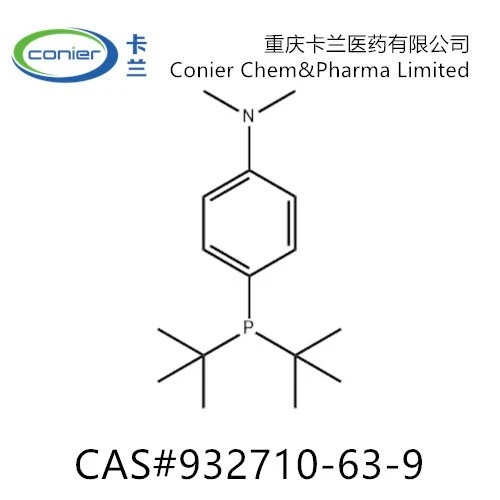
In addition to 3 - iodooxetane, we also offer a wide range of other fine chemicals, such as 932710 - 63 - 9, 29342 - 65 - 2 2 - bromobicyclo[2.2.1]heptane, and 62 - 57 - 7 2 - Aminoisobutyric Acid. Our team of experts is always ready to assist you in choosing the right chemicals for your specific needs.
If you are interested in purchasing 3 - iodooxetane or any of our other products, please feel free to contact us for more information and to start a procurement negotiation. We are committed to providing you with the best products and services at competitive prices.
References
- Atkins, P., & de Paula, J. (2014). Physical Chemistry. Oxford University Press.
- McMurry, J. (2012). Organic Chemistry. Brooks/Cole.
- Vogel, A. I. (1989). Vogel's Textbook of Practical Organic Chemistry. Pearson Education.
