

What are the thermodynamics of dibromomethane reactions?
As a supplier of dibromomethane, I've had the privilege of delving deep into the fascinating world of its chemical reactions and the underlying thermodynamics. Dibromomethane, with the chemical formula CH₂Br₂, is a colorless liquid with a sweet odor. It's widely used in various industries, including organic synthesis, as a solvent, and in the production of other chemicals. Understanding the thermodynamics of its reactions is crucial for optimizing processes, predicting outcomes, and ensuring safety.
Thermodynamic Basics
Before we dive into the specific reactions of dibromomethane, let's briefly review some fundamental thermodynamic concepts. Thermodynamics is the study of energy and its transformations in chemical and physical systems. The two key thermodynamic parameters we'll focus on are enthalpy (ΔH) and entropy (ΔS), which together determine the Gibbs free energy (ΔG) of a reaction.
The Gibbs free energy change is given by the equation: ΔG = ΔH - TΔS, where T is the temperature in Kelvin. A negative ΔG indicates that a reaction is spontaneous, meaning it will proceed without the need for external energy input. A positive ΔG means the reaction is non - spontaneous, while a ΔG of zero indicates that the system is at equilibrium.
Reactions of Dibromomethane and Their Thermodynamics
One of the most common reactions of dibromomethane is its use in the Simmons - Smith reaction. This reaction is a powerful method for the synthesis of cyclopropanes from alkenes. In the Simmons - Smith reaction, dibromomethane reacts with a zinc - copper couple (Zn(Cu)) to form a carbenoid intermediate (ICH₂ZnI), which then adds to the double bond of an alkene to form a cyclopropane ring.
The overall reaction can be written as: CH₂Br₂ + Zn(Cu) + R₂C = CR₂ → R₂C(CH₂)CR₂ + ZnBr₂
The enthalpy change (ΔH) for this reaction is negative, indicating that it is exothermic. The formation of the cyclopropane ring releases energy due to the formation of new carbon - carbon bonds. The entropy change (ΔS) is relatively small, as the number of moles of reactants and products is similar. Overall, the Gibbs free energy change (ΔG) is negative at typical reaction temperatures, making the reaction spontaneous.
Another important reaction of dibromomethane is its reaction with nucleophiles. For example, when dibromomethane reacts with a strong nucleophile like hydroxide ions (OH⁻), it can undergo a substitution reaction to form formaldehyde and bromide ions.
CH₂Br₂ + 2OH⁻ → H₂C = O+ 2Br⁻+ H₂O
This reaction is also exothermic (negative ΔH) due to the formation of the carbon - oxygen double bond in formaldehyde. The entropy change (ΔS) is positive because the number of moles of products is greater than the number of moles of reactants. As a result, the Gibbs free energy change (ΔG) is negative, and the reaction is spontaneous under standard conditions.
Factors Affecting the Thermodynamics of Dibromomethane Reactions
Several factors can influence the thermodynamics of dibromomethane reactions. Temperature is one of the most important factors. According to the Gibbs free energy equation (ΔG = ΔH - TΔS), an increase in temperature can have different effects on the spontaneity of a reaction depending on the signs of ΔH and ΔS.
For an exothermic reaction with a positive ΔS, an increase in temperature will make the reaction even more spontaneous. However, for an exothermic reaction with a negative ΔS, an increase in temperature may make the reaction non - spontaneous at high enough temperatures.
The nature of the reactants and solvents also plays a crucial role. Different nucleophiles or alkenes in the reactions of dibromomethane can have different reaction rates and thermodynamics. For example, a more reactive nucleophile will react more readily with dibromomethane, and the reaction may have a more favorable ΔG.
Solvents can affect the thermodynamics by solvating the reactants and products. Polar solvents can stabilize charged species, which can influence the entropy and enthalpy of the reaction.
Applications in Industry and the Importance of Understanding Thermodynamics
In the chemical industry, understanding the thermodynamics of dibromomethane reactions is essential for process optimization. By knowing the ΔH, ΔS, and ΔG of a reaction, chemists can determine the optimal reaction conditions, such as temperature and pressure, to maximize the yield of the desired product.
For example, in the production of cyclopropane derivatives using the Simmons - Smith reaction, controlling the temperature can help ensure that the reaction proceeds efficiently and selectively. If the temperature is too high, side reactions may occur, leading to lower yields and impurities.

Moreover, safety is a major concern in chemical processes. Knowing the thermodynamics of dibromomethane reactions can help prevent dangerous situations. Exothermic reactions, if not properly controlled, can lead to thermal runaway, which can cause explosions or other safety hazards.
Related Compounds and Their Significance
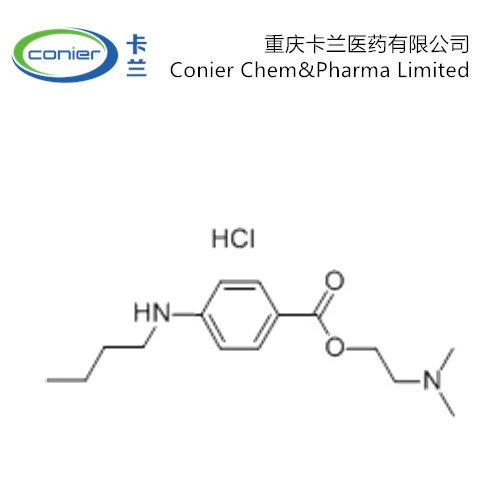
In addition to dibromomethane, there are many other fine chemicals that are important in the chemical industry. For example, 136 - 47 - 0 Tetracaine Hydrochloride is a local anesthetic that is widely used in medical procedures. Its synthesis and properties are also governed by thermodynamic principles.
151213 - 42 - 2 (S,S) - 2,8 - Diazabicyclo[4,3,0]nonane is a chiral compound that is used in asymmetric synthesis. Understanding the thermodynamics of its reactions is crucial for achieving high enantioselectivity in chemical reactions.
5324 - 84 - 5 Sodium 1 - octanesulfonate is a surfactant that is used in various applications, including chromatography. The solubility and reactivity of this compound are also influenced by thermodynamics.
Conclusion and Call to Action
In conclusion, the thermodynamics of dibromomethane reactions are complex but fascinating. By understanding the enthalpy, entropy, and Gibbs free energy changes of these reactions, we can optimize chemical processes, ensure safety, and develop new applications for dibromomethane and related compounds.
If you're interested in purchasing dibromomethane or learning more about its applications, I encourage you to reach out to us for a detailed discussion. Our team of experts is ready to assist you with your specific needs and provide you with high - quality products and technical support.
References
- Atkins, P., & de Paula, J. (2006). Physical Chemistry. Oxford University Press.
- Carey, F. A., & Sundberg, R. J. (2007). Advanced Organic Chemistry, Part A: Structure and Mechanisms. Springer.
- March, J. (1992). Advanced Organic Chemistry: Reactions, Mechanisms, and Structure. Wiley - Interscience.
