

Dibromomethane, also known as methylene dibromide, is a versatile organic compound with the chemical formula CH₂Br₂. It is a colorless, heavy liquid with a sweet odor and is widely used in organic synthesis, particularly in substitution reactions. As a leading supplier of dibromomethane, I am often asked about the reaction conditions for its substitution reactions. In this blog post, I will delve into the various factors that influence these reactions and provide insights based on scientific knowledge and practical experience.
Understanding Substitution Reactions of Dibromomethane
Substitution reactions involve the replacement of one atom or group of atoms in a molecule with another atom or group. In the case of dibromomethane, the bromine atoms can be substituted by other nucleophiles. There are two main types of substitution reactions: SN1 (unimolecular nucleophilic substitution) and SN2 (bimolecular nucleophilic substitution).
SN1 Reactions
SN1 reactions proceed via a two - step mechanism. The first step is the ionization of the substrate (dibromomethane in this case) to form a carbocation intermediate. The second step is the attack of the nucleophile on the carbocation. However, dibromomethane is not very prone to SN1 reactions because the methylene carbocation (CH₂⁺) formed is highly unstable due to its lack of electron - donating groups to stabilize the positive charge.
SN2 Reactions
SN2 reactions occur in a single step, where the nucleophile attacks the substrate while the leaving group (bromide ion) departs simultaneously. Dibromomethane is more likely to undergo SN2 reactions because it is a primary alkyl halide, and the transition state in an SN2 reaction is relatively stable.
Reaction Conditions for Dibromomethane Substitution Reactions
1. Nucleophile
The nature of the nucleophile plays a crucial role in the substitution reaction of dibromomethane. A good nucleophile has a high electron density and is capable of donating a pair of electrons to the electrophilic carbon atom in dibromomethane.
- Strength of the Nucleophile: Strong nucleophiles such as hydroxide ions (OH⁻), alkoxide ions (RO⁻), and cyanide ions (CN⁻) can react rapidly with dibromomethane in SN2 reactions. For example, when dibromomethane reacts with sodium hydroxide (NaOH), the hydroxide ion acts as a nucleophile and substitutes one of the bromine atoms to form bromomethanol (CH₂BrOH).
- Solvent Compatibility: The nucleophile should be soluble in the reaction medium. For example, if using an alkoxide ion as a nucleophile, a polar aprotic solvent like dimethyl sulfoxide (DMSO) or dimethylformamide (DMF) can be used to dissolve the alkoxide salt and facilitate the reaction.
2. Solvent
The choice of solvent can significantly affect the rate and mechanism of the substitution reaction.
- Polar Aprotic Solvents: Polar aprotic solvents such as acetone, acetonitrile, and DMSO are commonly used in SN2 reactions of dibromomethane. These solvents do not have hydrogen atoms attached to electronegative atoms, so they do not solvate the nucleophile strongly. As a result, the nucleophile remains relatively free and more reactive. For instance, in the reaction of dibromomethane with potassium cyanide (KCN) in DMSO, the cyanide ion can easily attack the carbon atom of dibromomethane.
- Polar Protic Solvents: Polar protic solvents like water and alcohols are less suitable for SN2 reactions of dibromomethane. These solvents can solvate the nucleophile through hydrogen bonding, reducing its reactivity. However, they may be used in some cases where the reaction conditions are carefully controlled, or when the nucleophile is strong enough to overcome the solvation effect.
3. Temperature
Temperature can influence the rate of the substitution reaction.
- Increasing Reaction Rate: Generally, increasing the temperature increases the kinetic energy of the reactant molecules, leading to more frequent and energetic collisions. This results in an increased reaction rate. However, too high a temperature can also cause side reactions such as elimination reactions or decomposition of the reactants. For the substitution reaction of dibromomethane with a nucleophile, a moderate temperature increase (e.g., from room temperature to 50 - 60 °C) can often enhance the reaction rate without causing significant side reactions.
- Reaction Selectivity: Temperature can also affect the selectivity of the reaction. At lower temperatures, the reaction may be more selective towards the desired substitution product, while at higher temperatures, other competing reactions may become more prominent.
4. Concentration of Reactants
The concentration of the reactants, i.e., dibromomethane and the nucleophile, can impact the reaction rate.
- Rate Law: According to the rate law for an SN2 reaction, the rate is proportional to the concentrations of both the substrate (dibromomethane) and the nucleophile. Therefore, increasing the concentration of either reactant will increase the reaction rate. For example, doubling the concentration of the nucleophile will double the reaction rate, assuming the concentration of dibromomethane remains constant.
Examples of Dibromomethane Substitution Reactions
Reaction with Sodium Hydroxide
When dibromomethane reacts with sodium hydroxide in a polar aprotic solvent like ethanol, the following reaction occurs:
CH₂Br₂ + NaOH → CH₂BrOH+ NaBr
The hydroxide ion attacks one of the bromine - bearing carbon atoms, displacing the bromide ion and forming bromomethanol.
Reaction with Potassium Cyanide
In the presence of a polar aprotic solvent such as DMSO, dibromomethane reacts with potassium cyanide:
CH₂Br₂+ 2KCN → CH₂(CN)₂ + 2KBr
Here, both bromine atoms are substituted by cyanide groups, forming malononitrile.
Applications and the Role of Our Company
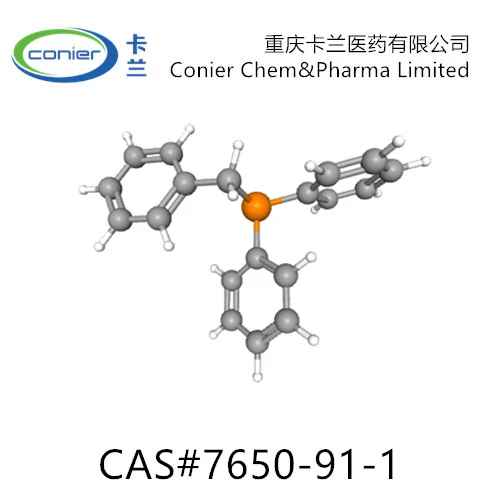
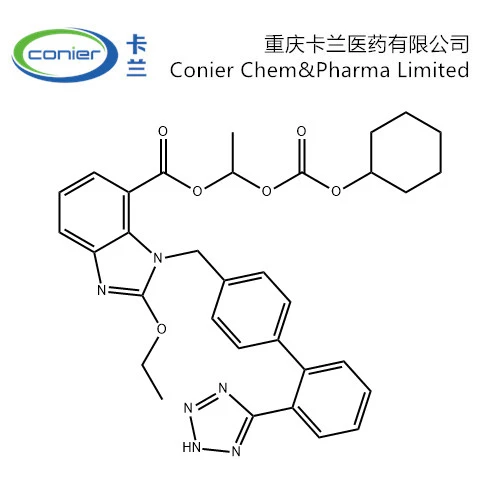
Dibromomethane substitution reactions are used in the synthesis of various organic compounds. For example, the synthesis of 2065 - 66 - 9 Methylriphenylphosphanium Iodide [/fine - chemicals/2065 - 66 - 9 - methylriphenylphosphanium - iodide.html] and 145040 - 37 - 5 Candesartan Cilexetil [/fine - chemicals/145040 - 37 - 5 - candesartan - cilexetil.html] may involve substitution reactions of dibromomethane at some stage. As a dibromomethane supplier, we provide high - quality dibromomethane (CAS No. 7650 - 91 - 1 [/fine - chemicals/7650 - 91 - 1.html]) that meets the strict requirements of different industries. Our product is carefully manufactured and tested to ensure its purity and reactivity, which is essential for successful substitution reactions.
Conclusion
The reaction conditions for dibromomethane substitution reactions are complex and depend on multiple factors such as the nature of the nucleophile, solvent, temperature, and reactant concentrations. By carefully controlling these conditions, chemists can achieve high - yield and selective substitution reactions. If you are involved in organic synthesis and require high - quality dibromomethane for your substitution reactions, we are here to support you. We invite you to contact us for more information and to discuss your procurement needs. Our team of experts can provide you with detailed technical support and guidance to ensure that you get the best results from your reactions.
References
- March, J. Advanced Organic Chemistry: Reactions, Mechanisms, and Structure. Wiley, 2007.
- Carey, F. A., & Sundberg, R. J. Advanced Organic Chemistry Part A: Structure and Mechanisms. Springer, 2007.
