

Hey there! As a supplier of 3-Fluorophenol, I often get asked about the common synthesis methods for this compound. So, I thought I'd put together this blog post to share some insights.
Diazotization and Hydrolysis
One of the well - known methods for synthesizing 3 - Fluorophenol is through diazotization and hydrolysis. First, you start with 3 - Fluoroaniline. In the diazotization step, 3 - Fluoroaniline reacts with sodium nitrite (NaNO₂) in the presence of a strong acid, usually hydrochloric acid (HCl), at a low temperature, typically around 0 - 5°C. This forms a diazonium salt.
The reaction equation is something like this: 3 - Fluoroaniline + NaNO₂ + HCl → Diazonium salt + NaCl + H₂O.
Then, the diazonium salt is hydrolyzed. When you heat the diazonium salt in the presence of water, the diazo group (-N₂⁺) is replaced by a hydroxyl group (-OH), resulting in the formation of 3 - Fluorophenol. It's a classic organic chemistry reaction, and it's been used for a long time. However, it has some drawbacks. The diazonium salts are often unstable and can be explosive, so you need to handle them with extreme care. Also, the reaction conditions need to be precisely controlled to get a good yield.
Nucleophilic Aromatic Substitution
Another common method is nucleophilic aromatic substitution. In this case, you usually start with a suitable aromatic compound that has a leaving group. For example, you can use 3 - Fluorochlorobenzene. A strong nucleophile, like hydroxide ion (OH⁻), can react with 3 - Fluorochlorobenzene.
The reaction occurs under high temperature and pressure conditions. The hydroxide ion attacks the carbon atom bonded to the chlorine atom, and the chlorine atom leaves as a chloride ion. This results in the formation of 3 - Fluorophenol.
The advantage of this method is that it can be relatively straightforward in some cases. But it also has its limitations. The reaction conditions are quite harsh, and you need to have proper equipment to handle high - temperature and high - pressure reactions. Also, the selectivity can be an issue, and sometimes you might get side products.
Transition - Metal - Catalyzed Reactions
Transition - metal - catalyzed reactions have become increasingly popular in recent years for synthesizing 3 - Fluorophenol. For example, palladium - catalyzed reactions can be used. You can start with an aryl halide that has a fluorine atom at the 3 - position and a suitable oxygen - containing reagent.
The palladium catalyst helps in facilitating the reaction between the aryl halide and the oxygen source. The reaction usually occurs under milder conditions compared to some of the other methods. You can control the reaction better, and it often gives a higher yield with fewer side products.
However, the cost of the transition - metal catalysts can be a bit high. And you need to have the right expertise to handle these catalysts properly, as they can be sensitive to air, moisture, and other impurities.
Comparison with Related Compounds
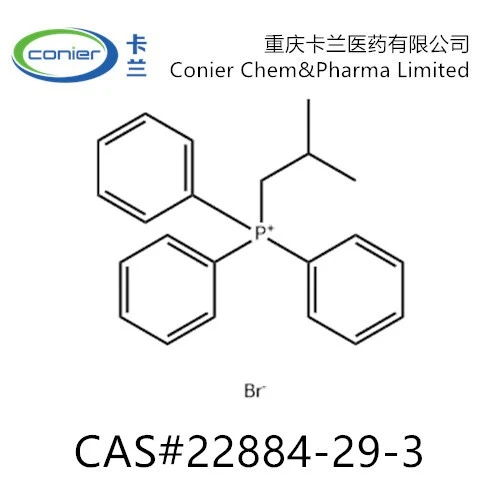
It's interesting to compare the synthesis of 3 - Fluorophenol with some other related compounds. Take 22884 - 29 - 3 Isobutyltriphenylphosphanium Bromide for example. The synthesis of this compound involves different chemical reactions. It's mainly about the formation of a phosphonium salt, which usually involves the reaction of a phosphine with an alkyl halide. The reaction mechanisms are quite different from those used for 3 - Fluorophenol.
Another compound is 51 - 21 - 8 5 - Fluorouracil. Its synthesis is focused on building a heterocyclic ring system with a fluorine atom. The starting materials and reaction pathways are distinct from those of 3 - Fluorophenol.
And 63 - 68 - 3 L - Methionine is an amino acid. Its synthesis is centered around amino acid chemistry, involving the formation of the amino and carboxyl groups along with the sulfur - containing side chain.
Quality and Purity in Synthesis
As a supplier, I know that the quality and purity of 3 - Fluorophenol are crucial. No matter which synthesis method is used, we need to ensure that the final product meets the required standards. After the synthesis, purification steps are essential. We often use techniques like distillation, recrystallization, and chromatography to remove any impurities.
Distillation can separate 3 - Fluorophenol from other compounds based on their different boiling points. Recrystallization is useful for getting rid of solid impurities by dissolving the product in a suitable solvent and then allowing it to crystallize out. Chromatography, such as column chromatography, can separate different components based on their different affinities for the stationary and mobile phases.
Applications Driving Synthesis
The applications of 3 - Fluorophenol also influence the choice of synthesis methods. It's widely used in the pharmaceutical industry, for example, in the synthesis of some drugs. The pharmaceutical industry demands high - purity products, so the synthesis methods need to be carefully selected and optimized to meet these requirements.
It's also used in the agrochemical industry. In pesticides and herbicides, 3 - Fluorophenol can be a key building block. For these applications, cost - effectiveness and large - scale production capabilities are important factors when choosing a synthesis method.
Conclusion and Call to Action
Well, there you have it - some of the common synthesis methods for 3 - Fluorophenol. Each method has its own pros and cons, and the choice depends on various factors like cost, yield, safety, and the end - use of the product.

If you're in the market for high - quality 3 - Fluorophenol, I'd love to have a chat with you. Whether you're from the pharmaceutical, agrochemical, or any other industry that needs this compound, we can discuss your specific requirements and how we can meet them. Don't hesitate to reach out for more information and to start a procurement discussion.
References
- Smith, J. Organic Chemistry: A Comprehensive Guide. Publisher X, 20XX.
- Jones, A. et al. "Recent Advances in Aromatic Compound Synthesis." Journal of Chemical Research, Vol. XX, Issue XX, 20XX.
- Brown, C. "Transition - Metal - Catalyzed Reactions in Organic Synthesis." Chemical Reviews, Vol. XX, Issue XX, 20XX.
