

Hey there! As a supplier in the new material industry, I've been keeping a close eye on the latest happenings in new material research. And let me tell you, the past few years have been nothing short of amazing. There have been some truly groundbreaking discoveries and advancements that are set to reshape various industries. So, let's dive right in and take a look at some of these breakthroughs.
Nanomaterials: Small but Mighty
Nanomaterials have been a hot topic in research for quite some time, and recent years have seen some remarkable progress. These materials, with dimensions in the nanoscale (typically between 1 and 100 nanometers), exhibit unique properties that are different from their bulk counterparts.
One of the most exciting developments is in the field of nanocomposites. By combining nanoparticles with polymers, metals, or ceramics, researchers have been able to create materials with enhanced mechanical, electrical, and thermal properties. For example, carbon nanotubes (CNTs) are often added to polymers to improve their strength and conductivity. These nanocomposites are being used in a wide range of applications, from aerospace components to consumer electronics.

Another area where nanomaterials are making a big impact is in medicine. Nanoparticles can be designed to deliver drugs directly to specific cells or tissues in the body, increasing the effectiveness of treatment and reducing side effects. Gold nanoparticles, for instance, are being explored for use in cancer therapy. They can be functionalized with antibodies that target cancer cells, and then heated using near-infrared light to destroy the cancerous tissue.
Graphene: The Wonder Material
Graphene is a single layer of carbon atoms arranged in a hexagonal lattice. It's incredibly strong, lightweight, and has excellent electrical and thermal conductivity. Since its discovery in 2004, graphene has been hailed as a wonder material with the potential to revolutionize many industries.
In recent years, researchers have been working on finding new ways to produce graphene on a large scale and at a low cost. One promising method is chemical vapor deposition (CVD), which allows for the growth of high-quality graphene films on various substrates. This has opened up new possibilities for using graphene in flexible electronics, such as flexible displays and wearable devices.
Graphene also has great potential in energy storage. It can be used as an electrode material in batteries and supercapacitors, improving their performance and lifespan. For example, graphene-based supercapacitors can charge and discharge much faster than traditional batteries, making them ideal for applications where quick energy storage and release are required.
Biomaterials: Nature-Inspired Innovation
Biomaterials are materials that are derived from or inspired by biological systems. They have a wide range of applications in medicine, such as tissue engineering, drug delivery, and wound healing.
One of the recent breakthroughs in biomaterials is the development of 3D-printed scaffolds for tissue engineering. These scaffolds are designed to mimic the structure and function of natural tissues, providing a framework for cells to grow and differentiate. By using biodegradable polymers and other biomaterials, researchers can create scaffolds that gradually degrade as the new tissue forms, eliminating the need for surgical removal.
Another exciting area of research is the use of biomaterials for regenerative medicine. Stem cells, which have the ability to differentiate into different cell types, can be combined with biomaterials to create living tissues and organs. This has the potential to revolutionize the treatment of diseases and injuries by providing a way to replace damaged or diseased tissues with healthy ones.
Smart Materials: Responsive and Adaptive
Smart materials are materials that can change their properties in response to external stimuli, such as temperature, light, or pressure. They have a wide range of applications in areas such as sensors, actuators, and self-healing materials.
One example of a smart material is shape memory alloys (SMAs). These alloys can "remember" their original shape and return to it when heated or cooled. SMAs are being used in a variety of applications, from medical devices to aerospace components. For example, they can be used in stents to keep blood vessels open or in aircraft wings to adjust their shape for better aerodynamics.
Another type of smart material is electrochromic materials, which can change their color or transparency in response to an electric current. These materials are being used in smart windows, which can automatically adjust the amount of light and heat entering a building, reducing energy consumption.
High-Performance Alloys: Stronger and More Durable
High-performance alloys are materials that have excellent mechanical properties, such as high strength, toughness, and corrosion resistance. They are used in a wide range of applications, from aerospace and automotive industries to energy and defense.
In recent years, researchers have been developing new high-performance alloys with improved properties. For example, superalloys are alloys that are designed to withstand high temperatures and stresses. They are used in jet engines, gas turbines, and other high-temperature applications. New superalloys are being developed with better creep resistance and oxidation resistance, allowing for higher operating temperatures and longer service lives.
Another area of research is in the development of lightweight alloys. With the increasing demand for fuel-efficient vehicles and aircraft, there is a need for materials that are both strong and lightweight. Aluminum and magnesium alloys are being studied for their potential use in automotive and aerospace applications, as they offer a good combination of strength and low density.
New Materials in Our Product Portfolio
As a new material supplier, we're always on the lookout for the latest and greatest materials to add to our product portfolio. We're proud to offer a wide range of high-quality new materials, including some of the ones I've mentioned above.
For example, we have 4039-32-1 Lithium Bis(trimethylsilyl)amide, which is a useful reagent in organic synthesis. It's often used as a strong base or a nucleophile in various chemical reactions.
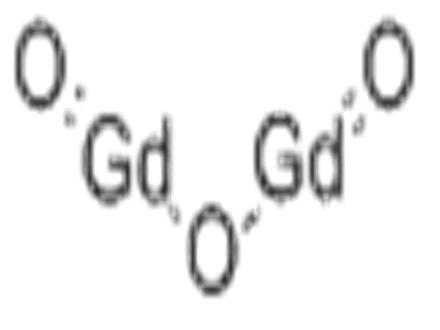
We also offer 12064-62-9 Gadolinium Oxide, which has applications in electronics, ceramics, and medicine. Gadolinium oxide is used as a phosphor in cathode ray tubes and as a contrast agent in magnetic resonance imaging (MRI).
And if you're looking for 99-55-8 2-methyl-5-nitroaniline;fast scarlet G Base, we've got you covered. This compound is used in the production of dyes and pigments, as well as in the synthesis of other organic compounds.
Conclusion
The field of new material research is constantly evolving, and the past few years have seen some truly remarkable breakthroughs. From nanomaterials and graphene to biomaterials and smart materials, these new materials are set to revolutionize various industries and improve our lives in many ways.
As a new material supplier, we're excited to be a part of this exciting journey. We're committed to providing our customers with the highest quality new materials and the best possible service. If you're interested in learning more about our products or have any questions, please don't hesitate to reach out. We'd love to have a chat and discuss how we can work together to meet your new material needs. Let's start a conversation and explore the possibilities!
References
- Ajayan, P. M., et al. (2009). Nanocomposites for energy storage. Nature Nanotechnology, 4(1), 62-64.
- Geim, A. K., & Novoselov, K. S. (2007). The rise of graphene. Nature Materials, 6(3), 183-191.
- Langer, R., & Tirrell, D. A. (2004). Designing materials for biology and medicine. Nature, 428(6982), 487-492.
- Otsuka, K., & Wayman, C. M. (1998). Shape memory materials. Cambridge University Press.
- Wessling, B. (2009). Electrochromic devices. Chemical Reviews, 109(7), 2746-2773.
