

Dibromomethane, also known as methylene dibromide, is a colorless, heavy liquid with a sweet odor. It is widely used in various industries, including pharmaceuticals, agrochemicals, and organic synthesis. As a leading supplier of dibromomethane, we often receive inquiries about its behavior under different conditions, especially high pressure. In this blog post, we will explore how dibromomethane behaves under high pressure and its implications for various applications.
Physical Properties of Dibromomethane under Normal Conditions
Before delving into its behavior under high pressure, let's first review the physical properties of dibromomethane under normal conditions. Dibromomethane has a molecular formula of CH₂Br₂ and a molecular weight of 173.83 g/mol. It has a boiling point of 96.9 °C and a melting point of -52.7 °C. At room temperature and atmospheric pressure, it is a liquid with a density of 2.497 g/cm³.
Dibromomethane is slightly soluble in water but highly soluble in organic solvents such as ethanol, ether, and chloroform. It is a non - flammable compound, which makes it relatively safe to handle under normal conditions. However, it is toxic and can cause irritation to the skin, eyes, and respiratory system.
Behavior of Dibromomethane under High Pressure
When subjected to high pressure, the physical and chemical properties of dibromomethane can change significantly. These changes are mainly due to the compression of the molecules, which leads to alterations in intermolecular forces and molecular structure.
Density and Volume Changes
One of the most obvious effects of high pressure on dibromomethane is the change in density and volume. As pressure increases, the molecules of dibromomethane are forced closer together, resulting in an increase in density and a decrease in volume. This is in accordance with the general principle of compressibility, where substances become more compact under high pressure.
The relationship between pressure, volume, and density can be described by the equation of state. For liquids like dibromomethane, the Tait equation is often used to model the pressure - volume behavior. The Tait equation is given by:
[V(P)=V_0\left[1 - C\ln\left(\frac{B + P}{B+P_0}\right)\right]]
where (V(P)) is the volume at pressure (P), (V_0) is the volume at the reference pressure (P_0), (B) and (C) are empirical constants.
Phase Transitions
Under high pressure, dibromomethane may undergo phase transitions. At normal pressure, it exists as a liquid. However, as pressure increases, it may transform into a solid phase. The exact pressure at which this phase transition occurs depends on the temperature.
Phase diagrams are useful tools for understanding the phase behavior of substances under different pressure and temperature conditions. For dibromomethane, the phase diagram can show the boundaries between the liquid, solid, and potentially other phases (such as high - pressure polymorphs) as a function of pressure and temperature.
Chemical Reactivity
High pressure can also affect the chemical reactivity of dibromomethane. The compression of molecules can increase the frequency of molecular collisions, which may enhance the reaction rate in some cases. Additionally, the change in molecular structure under high pressure can alter the electronic distribution within the molecule, making it more or less reactive towards certain reagents.
For example, in some organic synthesis reactions, high - pressure conditions can be used to promote reactions that are otherwise difficult to achieve at normal pressure. Dibromomethane can participate in reactions such as nucleophilic substitution reactions, where the bromine atoms can be replaced by other functional groups. Under high pressure, the rate of these reactions may be accelerated, leading to higher yields in a shorter time.
Applications of Dibromomethane under High Pressure
The unique behavior of dibromomethane under high pressure has several applications in different fields.
In Organic Synthesis
As mentioned earlier, high - pressure conditions can enhance the reactivity of dibromomethane in organic synthesis. It can be used as a reagent in the synthesis of various organic compounds, such as cyclopropane derivatives. In the presence of a strong base and high pressure, dibromomethane can react with alkenes to form cyclopropane rings through a carbene intermediate.
The high - pressure environment can also be used to control the stereochemistry of the reaction products. By adjusting the pressure and other reaction conditions, chemists can selectively obtain different stereoisomers, which is important in the synthesis of pharmaceuticals and agrochemicals.

In Material Science
Dibromomethane can be used as a precursor in the synthesis of certain materials under high - pressure conditions. For example, it can be used in the preparation of metal - organic frameworks (MOFs). Under high pressure, the reaction between dibromomethane and metal salts can lead to the formation of MOFs with unique structures and properties. These MOFs can have applications in gas storage, catalysis, and separation processes.
Our Role as a Dibromomethane Supplier
As a dibromomethane supplier, we understand the importance of providing high - quality products for various applications, including those under high - pressure conditions. We ensure that our dibromomethane meets strict quality standards, with low levels of impurities that could potentially affect its behavior under high pressure.
We also offer technical support to our customers. If you are conducting research or industrial processes involving dibromomethane under high pressure, our team of experts can provide advice on handling, storage, and reaction conditions. Whether you are working on organic synthesis projects or material science research, we can help you make the most of dibromomethane's properties under high - pressure environments.
If you are interested in purchasing dibromomethane for your high - pressure applications, or if you have any questions about its behavior under high pressure, please feel free to contact us for further discussion and procurement negotiations. We are committed to providing you with the best products and services to meet your specific needs.
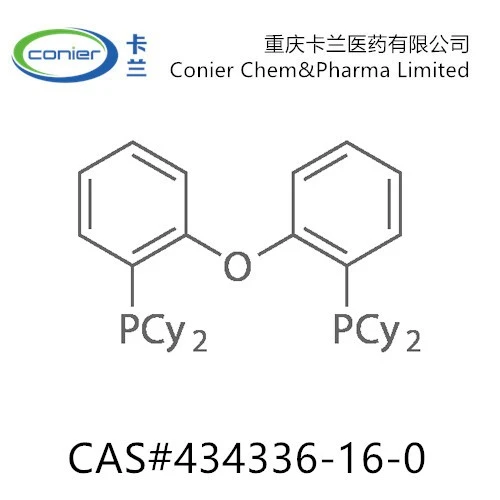
Some related products that you might also be interested in are 1029877 - 94 - 8 TRELAGLIPTIN SUCCINATE, 434336 - 16 - 0, and 998 - 40 - 3. These products have their own unique properties and applications, and our team can provide more information upon request.
References
- Pitzer, K. S. "Thermodynamics". McGraw - Hill, 1995.
- Leach, A. R. "Molecular Modelling: Principles and Applications". Pearson Education, 2001.
- March, J. "Advanced Organic Chemistry: Reactions, Mechanisms, and Structure". Wiley, 2007.
